 Brahmaki
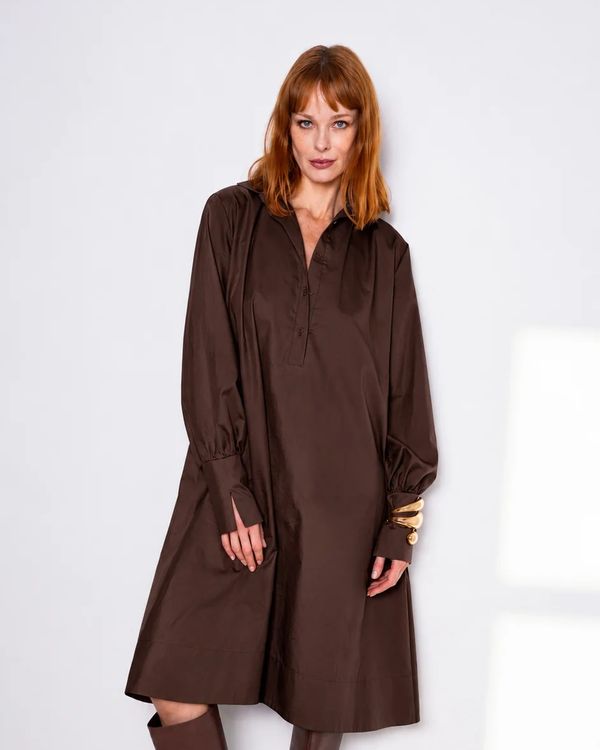 Monica Nera
 Angel Ruche
 Marame
 Hissa Line
 UK sustainable swimwear label
 Necessie
 Proche Studio
 Sally Skoufis
Short answer. Launch one market at a time, not five. Localise the offer, the creative and the landing experience rather than translating them: local currency, local shipping expectations, local payment methods, creative shot or selected for that customer, and an offer structure that matches the market's price sensitivity. Give the market its own Meta campaign with its own budget, and six to eight weeks to prove itself before the next one starts. Brahmaki opened four European markets this way in months five to twelve.
Before you launch anywhere
A new market is funded by the home market. If the home account is not yet converting, scaling and retaining, the new market will drain it. The order is in scaling a fashion brand, and the short version is that expansion is stage five, not stage one.
Pick one market, and pick it for a reason
The right first market is the one where the brand already has organic signal: orders that arrived without ads, followers, press, a founder connection. Second best is a market that behaves like the home market. A Danish brand usually goes to Sweden, Norway or Germany before it goes to the United States. A UK brand usually goes to Ireland, the Netherlands or Germany. The full list of what we know about each is on the market pages.
Localise, do not translate
Translation is the easy part and the least important. What actually changes between markets:
- The offer. A German customer expects free returns and will not buy without them. A French customer is more price sensitive on basics and less on a statement piece. A UAE customer expects fast delivery and will pay for it. The offer structure has to match.
- The creative. The same campaign imagery does not work everywhere. Colour, styling, the model, the setting and the hook all read differently. We select or shoot creative per market and test it in that market's own campaign.
- The landing experience. Local currency, local sizing convention, local shipping and returns stated plainly, local payment methods (iDEAL in the Netherlands, Klarna in Sweden and Germany, Apple Pay everywhere), and duties handled so there is no surprise at the door. A store that feels foreign converts at half the rate of one that feels local.
- The email. Segmented by market from the first signup, so a German customer never gets a UK shipping message.
Structure the account for it
Each new market gets its own prospecting campaign with its own budget, small to begin with, so the home market does not absorb the spend and so the new market's results can be read on their own. Creative testing for the market happens inside that campaign. Retargeting is shared until the market is large enough to justify its own.
Six to eight weeks to prove it
A new market needs time for the algorithm to learn and for the first customers to come back. We give it six to eight weeks at a modest budget before deciding. If the return is approaching the home market's, spend goes up. If it is not, we look at the offer and the creative before we look at the market, because it is usually one of those. Only when a market is proven does the next one start.
What it looked like on Brahmaki
Four European markets, launched in sequence over months five to twelve, each with its own localised offer, creative and landing experience. The founder calls it the best investment they have made in their growth, and the account went from €120,000 to €2.8M a month over the same period. The full story is in the Brahmaki case study.
Markets we have launched into
France, Italy, the United Kingdom, the United States, Germany, Switzerland, the Netherlands, Belgium, Sweden, Denmark, Austria, Luxembourg, Monaco, Iceland, the UAE, South Africa, Australia and Japan among them. What changes in each of the ones we work in most is written up on the market pages.
Questions on this
How many markets should a fashion brand launch at once?
One. Each market needs its own localised offer, creative and landing experience and six to eight weeks to prove itself. Launching several at once with a translated store and a shared budget is the most common way expansion fails.
What is the difference between localising and translating a fashion store?
Translation changes the language. Localisation changes the offer, the creative, the currency, the shipping and returns terms, the payment methods and the sizing convention so the store feels local. Localised stores convert at roughly twice the rate of translated ones in our experience.
Which market should a European fashion brand expand to first?
The one where it already has organic signal, or the one that behaves most like its home market. Danish brands usually go to Sweden, Norway or Germany first. UK brands usually go to Ireland, the Netherlands or Germany.